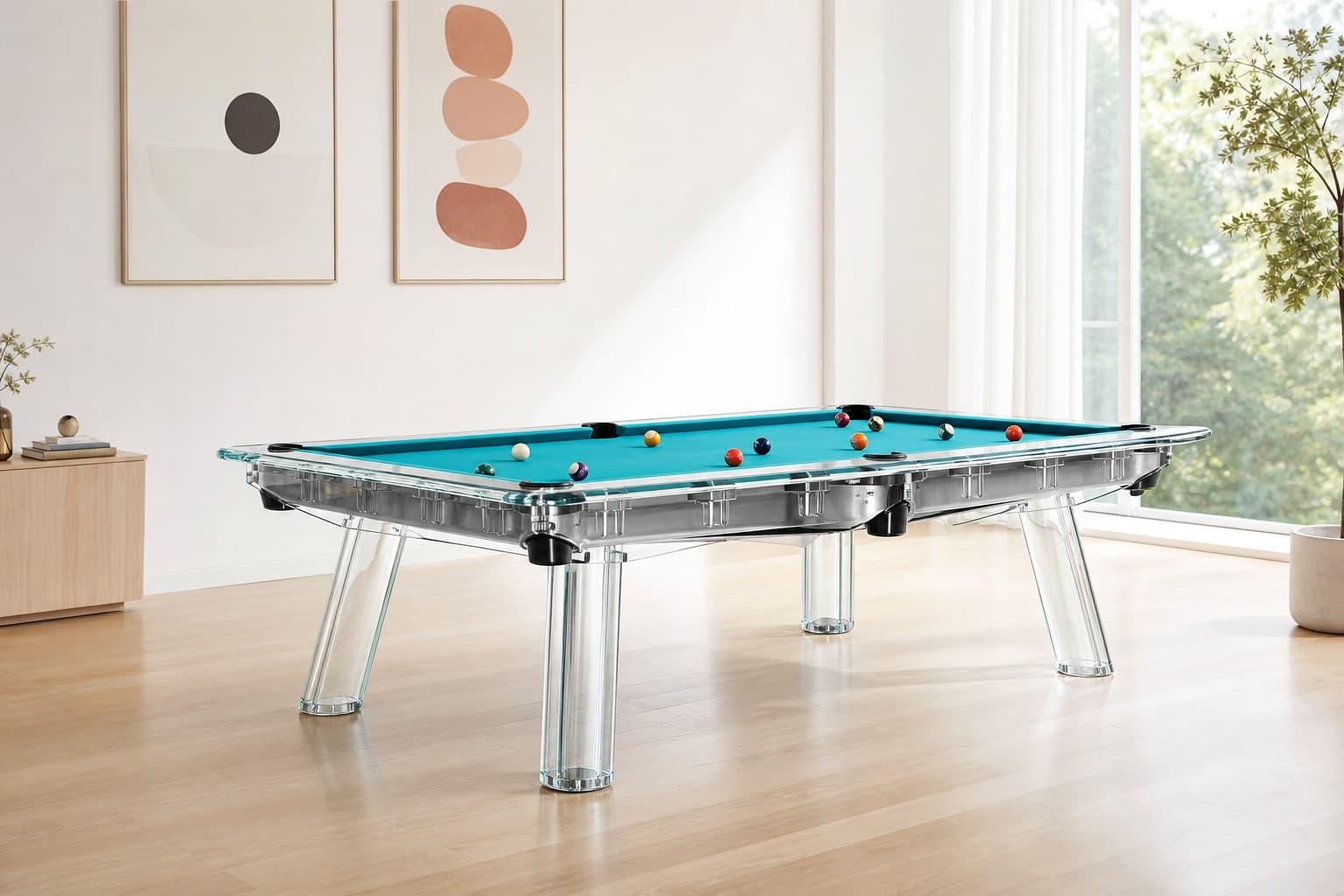
Glass or Acrylic Pool Table
Compare Flint Glass and Flint Acrylic by material placement, footprint, visual structure and the details to confirm before specifying.
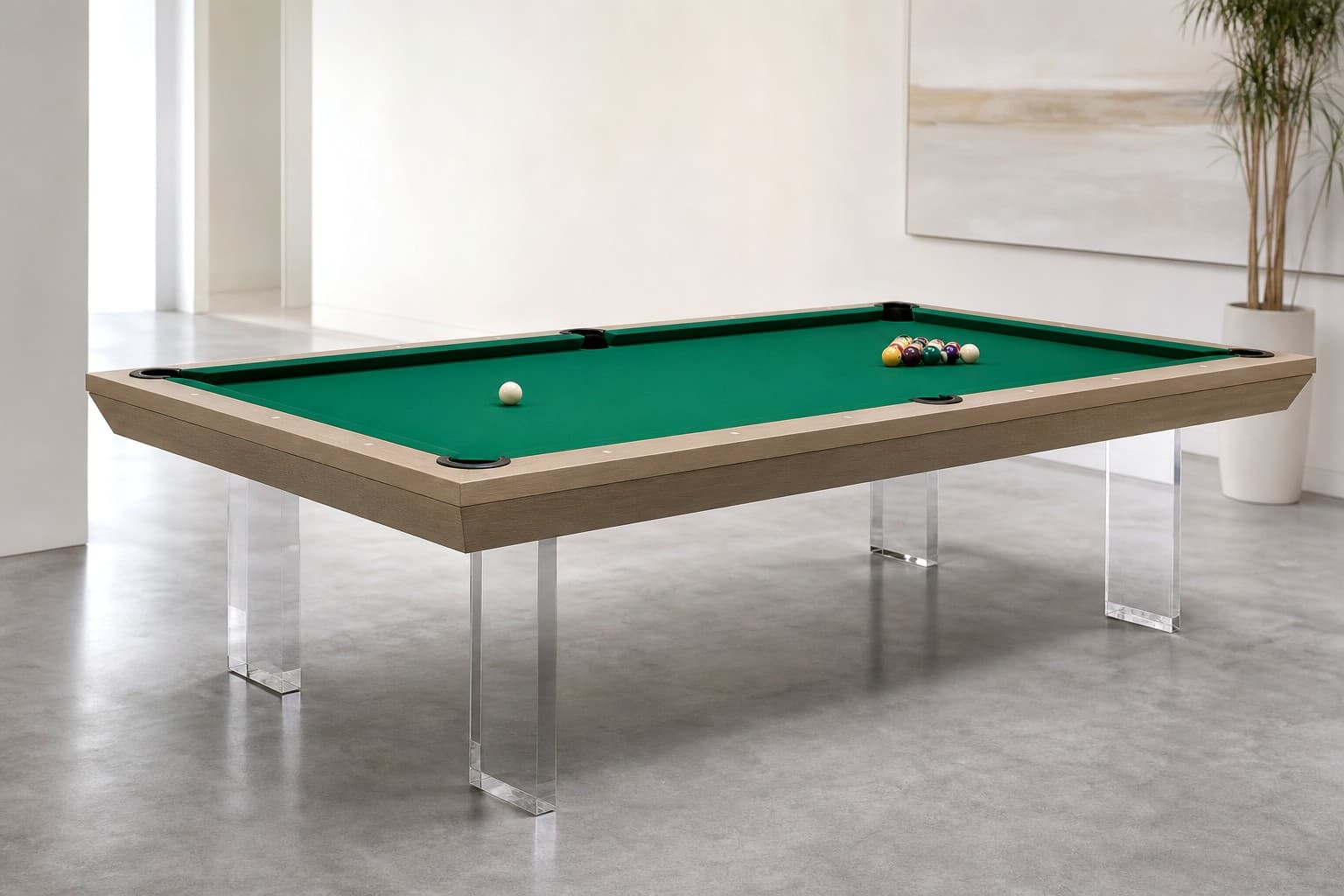
Compare the complete structures
Flint Glass and Flint Acrylic use transparent materials in different parts of the structure. The current catalogue describes Glass with glass rails and legs plus metal components, while Acrylic combines acrylic supports with wood rails. The names do not mean that both playing beds are glass, or that acrylic and glass can be substituted part for part.
Read the footprint as well as the appearance
The listed overall dimensions are 2560 x 1480 x 850 mm for Glass and 2450 x 1390 x 810 mm for Acrylic. These describe the exterior, not the playing area or packed size. Confirm the final configuration and actual cue clearance before approving a floor plan.
Confirm the playing bed
The current Glass catalogue lists a slate bed. Acrylic's earlier records mention both slate and granite, so its bed material is subject to configuration confirmation. Request the exact material, thickness and assembly arrangement in the order specification; do not infer playing performance from transparency or model names.
Check care against the actual finish
Ask for a care sheet for the selected glass, acrylic, lacquer and cloth. Use a soft cloth and avoid abrasives; do not assume a glass-cleaning solvent is suitable for acrylic or a coated metal part. Confirm any cleaning agent with the supplier and test it on an inconspicuous approved sample first.
Approve a sample and an order specification
Compare the physical sample with your room lighting and adjacent materials. Check exposed edges, hardware colour, cloth, rail finish and the exact configuration pictured. Material illustrations are not substitutes for a verified sample, and a finish request is not an approved custom build.